Jurong one-bedder’s 4.65% yield is not a dual-key substitute
Lake Grande led a selected rental comparison, but entry price, full ownership costs and household privacy determine which home actually fits.
Published 2026-10-08 · 6 min read
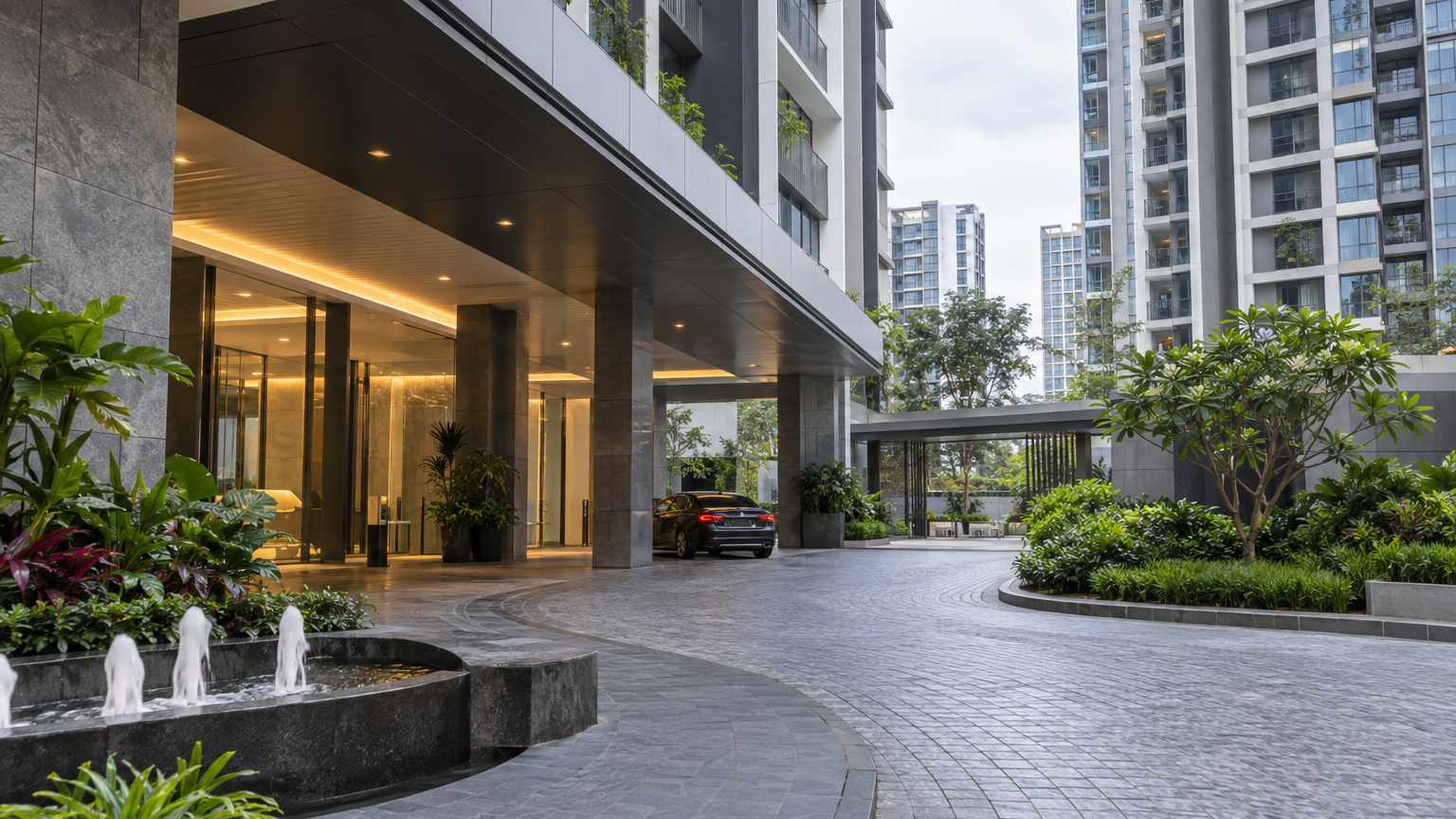
A Jurong one-bedroom condo has been credited with a 4.65% rental yield after property tax, the highest result in a selected comparison. The figure is eye-catching, but it answers only one question: how much rent the unit produced relative to its entry price under that analysis.
For households comparing a compact investment unit with a dual-key home, that is not enough. A one-bedder is generally built for one household or tenancy; a genuine dual-key home separates one legal apartment into two more private living zones. They serve different needs, even when both can generate rent.
The purchase price does much of the work
Rental yield is usually expressed as annual rent divided by the property’s purchase price. This makes the price paid—the denominator in the calculation—just as important as the rent collected.
Consider a simplified example. Annual rent of S$36,000 on an S$800,000 purchase gives a gross yield of 4.5%. The same rent on a S$900,000 purchase produces 4%. Nothing about the tenant, home or monthly rent changed; only the entry price did.
That helps explain why an older, more affordably bought condo can show a stronger percentage than a newer or more expensive alternative. It does not automatically provide more rental income in dollar terms, nor does it tell a buyer whether today’s asking or transacted price can reproduce an earlier result.
The reported Lake Grande figure therefore needs to be read as a result tied to particular inputs. Without the exact purchase price, achieved rent and Annual Value used in the original calculation, 4.65% cannot be independently recreated for another unit or purchase today.
Lake Grande itself is a fully sold, 99-year leasehold development with 710 apartments, ranging from one- to five-bedroom units, according to developer Sunway MCL.[S3] Unit size, floor, condition, facing and tenancy can all differ, so a project-level label should not replace checks on the actual apartment being considered.
“After property tax” is not the same as net return
Singapore property tax is charged on property ownership. The Inland Revenue Authority of Singapore calculates it by multiplying a property’s Annual Value, or AV, by the applicable tax rate.[S1]
AV is an official estimate of the property’s annual market rent based on comparable properties. It may be higher or lower than the rent stated in an actual tenancy agreement, which is why buyers should not simply use the contracted rent as a substitute.[S2]
For a residential property that is fully rented out, non-owner-occupier rates apply progressively. The current schedule starts at 12% on the first S$30,000 of AV, with higher portions taxed at 20%, 28% and 36% as AV rises.[S1]
Deducting that bill is useful, but it still does not produce a complete net return. The owner may also face maintenance contributions, vacancy between leases, repairs, furnishing costs, agent fees and insurance. These costs vary by unit and year, so they cannot be reliably filled in with one standard assumption.
Financing adds another layer. Mortgage payments affect the owner’s monthly cash flow, although the loan principal is not normally treated as an operating expense in a property-yield calculation. Two buyers paying the same price can therefore experience very different cash outcomes if one borrows heavily and the other uses more cash.
A one-bedder and a dual-key home solve different problems
A genuine dual-key apartment is one legal property designed with separated living zones, usually including a smaller annex with private internal access. Depending on the floor plan, the two sides may share an entrance foyer before splitting into their respective spaces.
That is different from an ordinary two- or three-bedroom apartment where everyone uses the same front door, living room and kitchen. Simply locking a bedroom door does not create the privacy, circulation or self-contained facilities associated with a purpose-designed dual-key layout.
The first-party Lake Grande material reviewed for this article lists apartments from one to five bedrooms, but it does not establish that a particular unit has a dual-key configuration.[S3] Buyers should verify any such claim against the official floor plan and sale documents rather than relying on a listing label.
For a landlord seeking one straightforward tenancy, a one-bedder may be the cleaner proposition. There is one living area, one tenant household and usually one set of leasing arrangements.
A dual-key buyer may have a broader brief: parents living nearby but with privacy, an adult child occupying the annex, or an owner staying on one side while renting the other. That flexibility has practical value, but it may also come with a higher purchase price, more complicated household boundaries and a smaller living area on each side.
This is why comparing only the two headline yields can mislead. The better question is whether both properties are being asked to do the same job.
Jurong’s plans are context, not rent in the bank
Lake Grande sits within the wider Jurong area. The Urban Redevelopment Authority describes Jurong Lake District as a 410-hectare district combining Jurong Gateway and Lakeside, planned as Singapore’s largest mixed-use business district outside the city centre.[S4]
More housing is planned in the west, while the Jurong Region Line is expected to open in stages from 2027 to 2029.[S5] These plans may shape how buyers think about long-term accessibility and the neighbourhood, but they do not establish what a particular Lake Grande unit can rent for now.
A defensible rental comparison still needs current evidence: recent leases for similar units, the actual purchase price under consideration, the unit’s AV and realistic allowances for periods without a tenant. Future infrastructure should not be entered into the spreadsheet as though it were already collected rent.
Start with the household brief, then run the numbers
For an investor considering a Lake Grande one-bedder, the reported 4.65% is best treated as a prompt to investigate—not a return attached permanently to the condo. A different acquisition price, rent, tax assessment or vacancy period will change the outcome.
For a household considering dual-key living, the floor plan comes first. Check how residents enter each zone, what facilities are genuinely separate, how sound and privacy might work, and whether the arrangement suits family use when no tenant is present.
Only then should the two options meet in the spreadsheet. Compare sustainable rent, purchase price, property tax, recurring costs, financing and usable privacy on the same basis. A lower-priced one-bedder may win the yield calculation; a properly designed dual-key home may justify itself through flexibility that a percentage cannot capture.
Sources
- 2026 Property Tax Bill · Inland Revenue Authority of Singapore
- Property Tax Rates · Inland Revenue Authority of Singapore
- Lake Grande · Sunway MCL
- Jurong Lake District · Urban Redevelopment Authority
- More Convenient and Connected Homes · Urban Redevelopment Authority